In this articleShowHide
Few things are more frustrating in an Odisha summer than an AC that hums along but leaves the room warm. The good news: most cooling problems come from a short list of causes, and a few of them you can check yourself in ten minutes. The rest need proper tools — a pressure gauge, a multimeter and some experience — and that is where a trained technician saves you time and money.
This guide covers the nine causes our technicians find most often on AC repair visits across Bhubaneswar, Cuttack, Puri and Khordha, roughly in the order you should rule them out.
First, rule out the simple things
Before assuming a fault, spend two minutes on the basics. A surprising number of "not cooling" calls are settings or airflow issues:
- Mode: make sure the remote is set to Cool (snowflake icon), not Fan, Dry or Auto.
- Temperature: set it to 24°C. Setting 16°C does not cool faster — it only makes the compressor run longer.
- Doors and windows: a door left open to a hot corridor can overwhelm a 1 or 1.5 ton unit.
- Outdoor unit: check that its fan is spinning. If the indoor unit blows air but the outdoor fan is still, the problem is outside.
9 common reasons your AC is not cooling
1. Clogged air filters
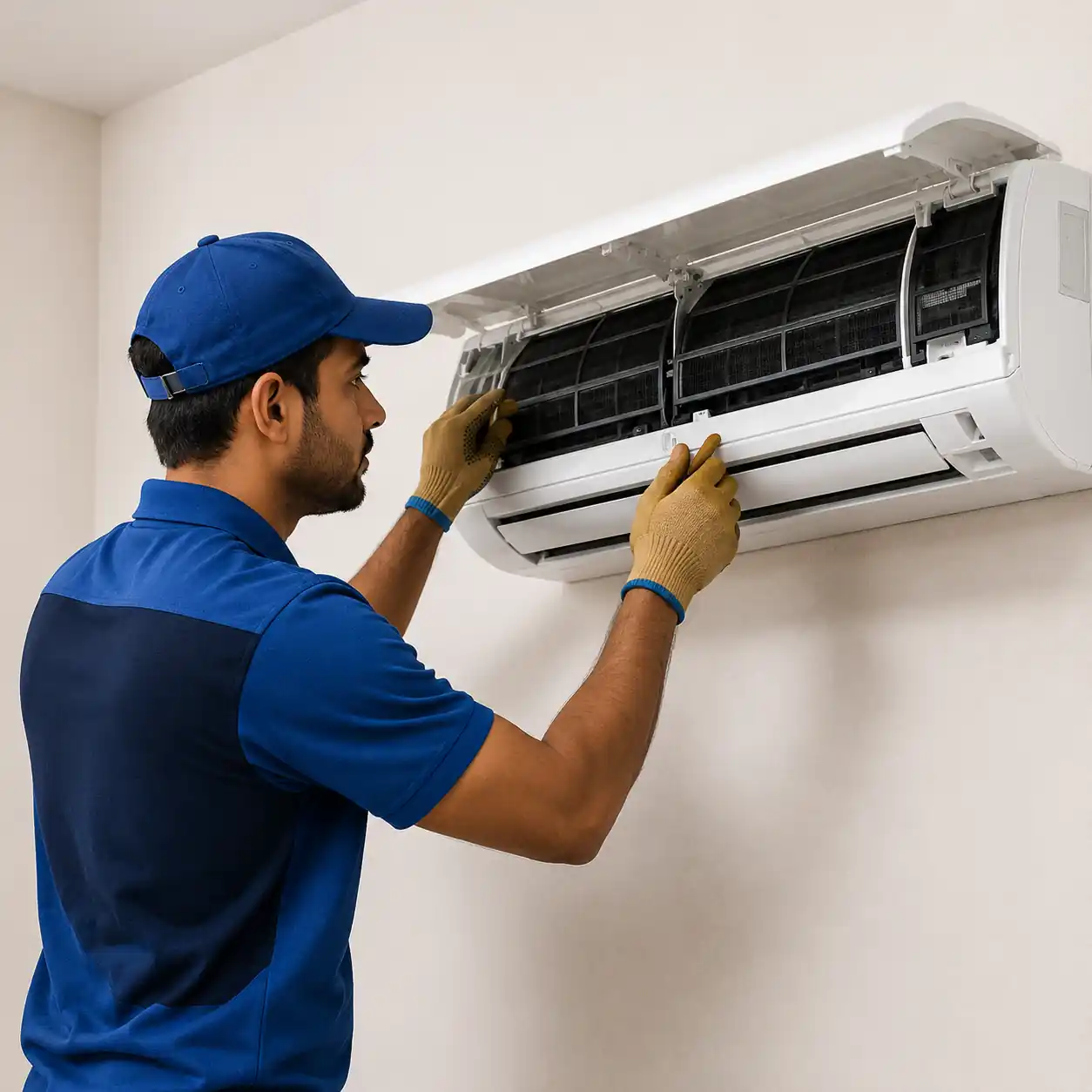
Dust-choked filters are the number one cause of weak cooling. Less air flows over the cold coil, so less heat is removed from the room — and in severe cases the coil can even freeze. Filters in a daily-use AC in a dusty city can clog within a few weeks. Washing them is the first thing to try.
2. Dirty evaporator coil (indoor unit)
Behind the filter is the evaporator coil. Fine dust that slips past the filter sticks to its wet fins and forms a layer that blocks heat transfer. Unlike the filter, the coil needs a proper wash with pressure or foam cleaning, which is part of a deep AC service.
3. Dirty or blocked condenser (outdoor unit)
The outdoor unit's job is to throw heat out of your home. If its coil is coated with dust, pollen or bird droppings, or if it is boxed in without space to breathe, heat cannot escape and cooling drops sharply — especially in the afternoon. Keep at least a foot of open space around it and have the condenser washed during servicing.
4. Low refrigerant from a leak
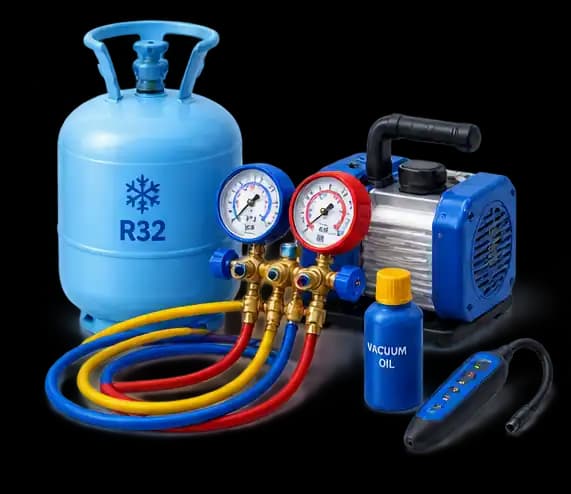
Refrigerant circulates in a sealed loop — it is not consumed. If the level is low, there is a leak, usually at flare joints, a corroded coil or damaged piping. Signs include ice on the indoor coil or copper pipes, a hissing sound, and cooling that gets worse over weeks. Read our guide on AC gas filling to understand why a good technician finds the leak before refilling.
Avoid the "gas top-up" trap
Topping up gas without fixing the leak only buys a few weeks. Ask the technician to show you the pressure reading and explain where the leak is before any refill.
5. Failed capacitor
The capacitor gives the compressor and outdoor fan motor the electrical push they need to start. When it weakens — common after voltage fluctuations — the outdoor unit may hum without starting, or the fan may not spin. It is an inexpensive part, but it stores a charge and should only be tested and replaced by a technician.
6. Compressor not starting or tripping
If the compressor starts and stops repeatedly, or trips the MCB, possible causes range from a bad capacitor or relay to overheating from a dirty condenser, low voltage or, less commonly, a failing compressor. Correct diagnosis matters here, because compressor replacement is the most expensive AC repair and is often not the real problem.
7. Faulty sensor, thermostat or PCB
Modern ACs rely on room and coil temperature sensors and a control board (PCB). A faulty sensor can make the AC believe the room is already cold and cut the compressor early. Inverter models add an inverter PCB on the outdoor side. Error codes on the display usually point to the area of the fault — see our inverter AC troubleshooting guide.
8. Indoor fan or blower problems
If very little air comes out of the vents, the blower wheel may be clogged with dust and mould, or the fan motor may be weakening. A clogged blower also causes bad smells and water spitting from the vents.
9. Wrong size or poor installation
A 1 ton AC in a large, top-floor room facing west will struggle every afternoon no matter how well it is serviced. Long or kinked piping, missing insulation and a poorly placed outdoor unit also reduce capacity. If cooling has never been good since day one, have the installation checked.
What you can safely do yourself
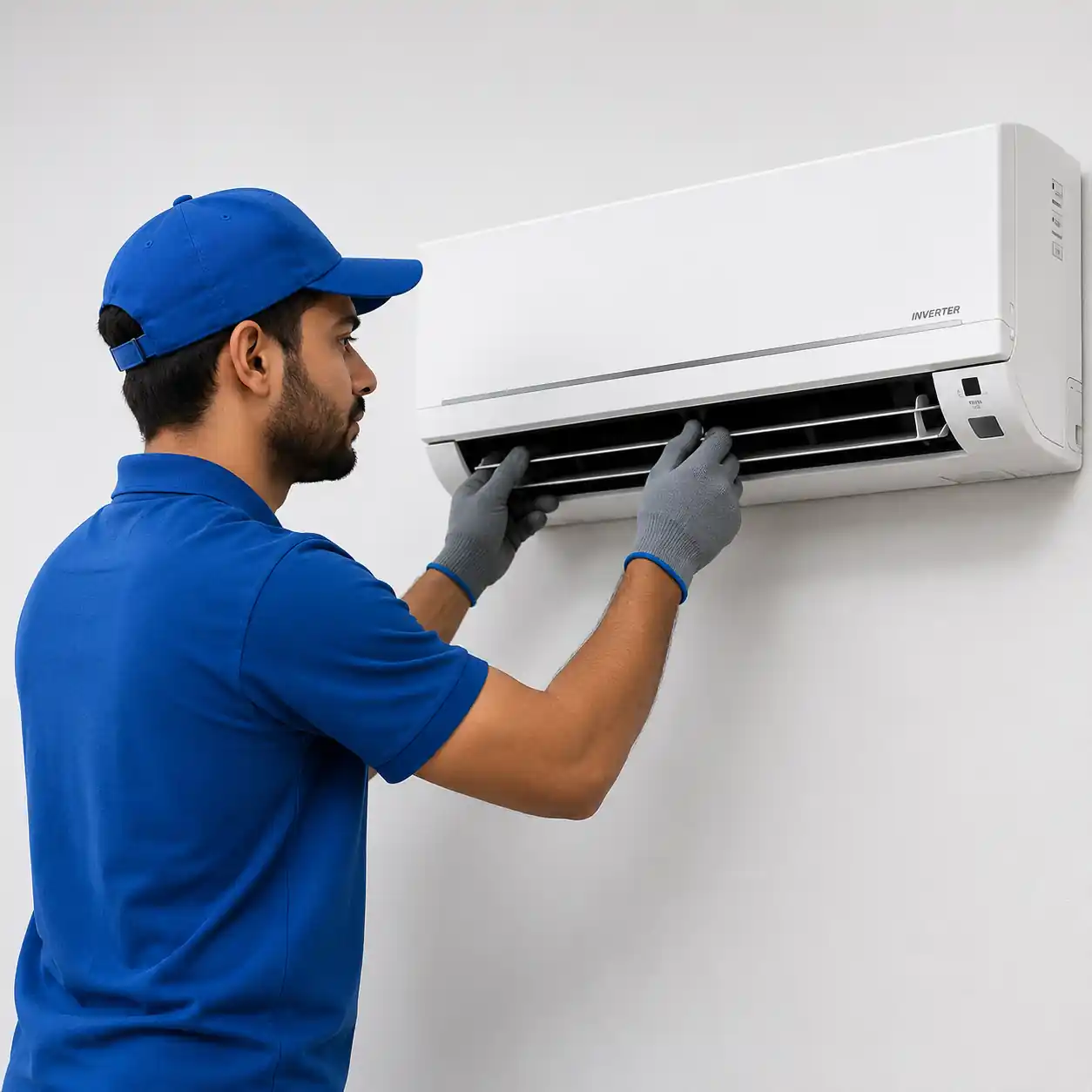
- Switch off the AC and wash the indoor filters in plain water; dry them fully before refitting.
- Clear leaves, boxes or clothes lines from around the outdoor unit.
- Close curtains on sun-facing windows during the hottest hours.
- Restart the AC on Cool at 24°C and wait 30 minutes with the room closed.
- Note any error code on the display or blinking lights — it helps the technician diagnose faster.
Leave these to a technician
Opening the outdoor unit, touching the capacitor or PCB, handling refrigerant and washing coils with water near electrical parts all carry a risk of electric shock or damage.
Symptom checker: what the signs usually mean
| What you notice | Most likely cause | Who should fix it |
|---|---|---|
| Weak airflow from vents | Clogged filter or dirty blower | You (filter) / technician (blower) |
| Ice on indoor coil or pipes | Low refrigerant or very dirty filter | Technician |
| Outdoor fan not spinning | Capacitor or fan motor fault | Technician |
| Cools at night, weak in afternoon | Dirty condenser or undersized AC | Technician |
| Error code on display | Sensor, PCB or protection trip | Technician |
| Water dripping indoors | Blocked drain or dirty coil | Technician |
How a professional AC repair visit works
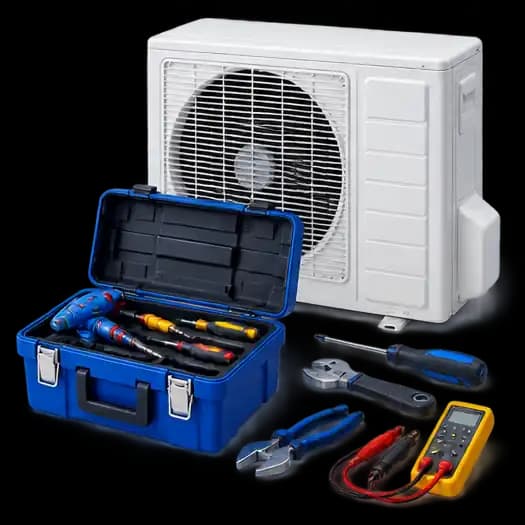
On a repair visit, our technician inspects both the indoor and outdoor units, measures operating pressure and electrical values, and checks airflow and drainage. You are told what is wrong and what it will cost before any repair begins — parts and refrigerant are quoted separately. Most common faults, such as capacitors, sensors and blocked drains, are fixed in the same visit.
If you are in Bhubaneswar, Cuttack, Puri or Khordha, we aim to reach you the same day, and the first visit within our 50km range is free.
How to prevent cooling problems
Most of the causes above build up slowly. Washing filters every two to three weeks in summer, a full service before peak season and a check of the outdoor unit's surroundings prevent the majority of breakdowns. If you have several ACs at home or in an office, an AC AMC schedules this for you so nothing is missed.
Frequently asked questions
Paras Refrigeration Service Team
AC service technicians, Bhubaneswar · Last reviewed 5 Oct 2026
Written by the Paras Refrigeration service team from day-to-day experience repairing, installing and maintaining residential and commercial AC systems across Bhubaneswar, Cuttack, Puri and Khordha.
- #AC repair
- #Cooling problem
- #Split AC
- #Troubleshooting