In this articleShowHide
AC water leakage is one of the most common calls we get once the humidity rises in Odisha. You notice a damp patch on the wall, a drip on the bed, or a small puddle under the indoor unit. It looks alarming, but in most cases the AC is not broken — the water it is supposed to remove from the air simply cannot get out the way it should.
This guide explains where that water comes from, the six usual reasons a split AC drips indoors, what you can safely check yourself, and when an AC repair visit makes sense.
Why your AC produces water in the first place
When warm, humid room air passes over the cold evaporator coil, moisture condenses on the fins — the same way a cold glass sweats on a summer afternoon. That water drips into a plastic drain tray under the coil, then flows by gravity through a drain pipe to the outside. On a humid day in Bhubaneswar or Puri, a 1.5 ton split AC can easily remove several litres of water in a day of running.
So water outside, from the drain pipe, is normal. Water inside the room means something in that path — coil, tray, pipe or slope — is not working.
6 common causes of AC water leakage indoors
1. Blocked AC drain pipe
This is the cause in the majority of cases. Dust that gets past the filter mixes with condensate and forms a sticky slime in the drain tray and pipe. Insects, lizards and mud-dauber wasp nests at the outdoor end make it worse. Once the pipe is choked, the tray fills and water spills over the front edge of the indoor unit — usually from the bottom or the left or right corner.
2. Dirty filters and a frozen coil
Clogged filters starve the coil of airflow. The coil gets colder than it should, ice forms on it, and when the AC cycles off the ice melts in one go. The tray overflows, and you may also see water spitting from the louvres. If the leak comes with weak cooling, check the filters first.
3. Low refrigerant
A refrigerant leak drops the coil pressure and temperature, which also causes icing. Signs include frost on the copper pipes near the indoor unit, a gradual loss of cooling over weeks, and a leak that keeps returning even after the drain is cleaned. Our guide to AC gas filling explains why the leak must be found before any refill.
4. Indoor unit not level or drain slope wrong
The indoor unit is designed to sit with a very slight tilt towards the drain outlet side. If it was mounted perfectly level, tilted the wrong way, or the drain pipe runs uphill anywhere along its route, water pools instead of draining. This often shows up in the first season after a new or shifted AC, and points back to the installation.
5. Damaged, loose or disconnected drain pipe
The drain hose joins the indoor unit's outlet behind the unit, inside the wall sleeve. If the joint is loose, cracked or was pulled during repainting or relocation, water runs down inside the wall and appears as a damp patch below the AC rather than as a drip from the unit itself.
6. Sweating pipes and missing insulation
The copper suction pipe runs cold. If its insulation is torn or missing where it passes through the wall, condensation forms on the bare pipe and trickles down the wall. Coastal and monsoon humidity makes this much more noticeable.
Switch off if water is near electrics
If water is dripping onto a socket, the stabiliser or an extension board, turn the AC off at the MCB before doing anything else. Water and live wiring together are a real shock and short-circuit risk.
Quick diagnosis: where the water appears
| What you see | Likely cause | Who should fix it |
|---|---|---|
| Steady drip from the bottom edge of the unit | Blocked drain tray or pipe | Technician |
| Water spitting from the louvres with weak cooling | Dirty filters or frozen coil | You (filters) / technician (coil) |
| Frost on copper pipes, leak keeps returning | Low refrigerant from a leak | Technician |
| Damp patch on the wall below the unit | Loose drain joint or sweating pipe | Technician |
| Leak started right after installation or shifting | Wrong tilt or drain slope | Technician |
| No water at all from outdoor drain end | Fully choked drain line | Technician |
What you can safely check yourself
- Switch off the AC and wash the indoor filters in plain water. Dry them fully in the shade before refitting.
- Find the outdoor end of the drain pipe. Make sure it is not kinked, crushed under a pot, or submerged in a puddle or a bucket of water.
- Run the AC for 20 minutes and check whether water is flowing out of that pipe. A slow trickle or nothing at all suggests a blockage.
- Look at the indoor unit from the side. If it visibly tilts away from the drain side, note it for the technician.
- Check the copper pipes near the unit for frost or ice and mention it when you book.
Avoid DIY drain fixes that cause new problems
Pushing wire or sticks into the drain outlet can puncture the tray, and pouring water into the unit can wet the PCB. Blowing hard into the pipe from outside sometimes helps, but if it does not clear immediately, leave it to a technician.
How a technician fixes AC water leakage
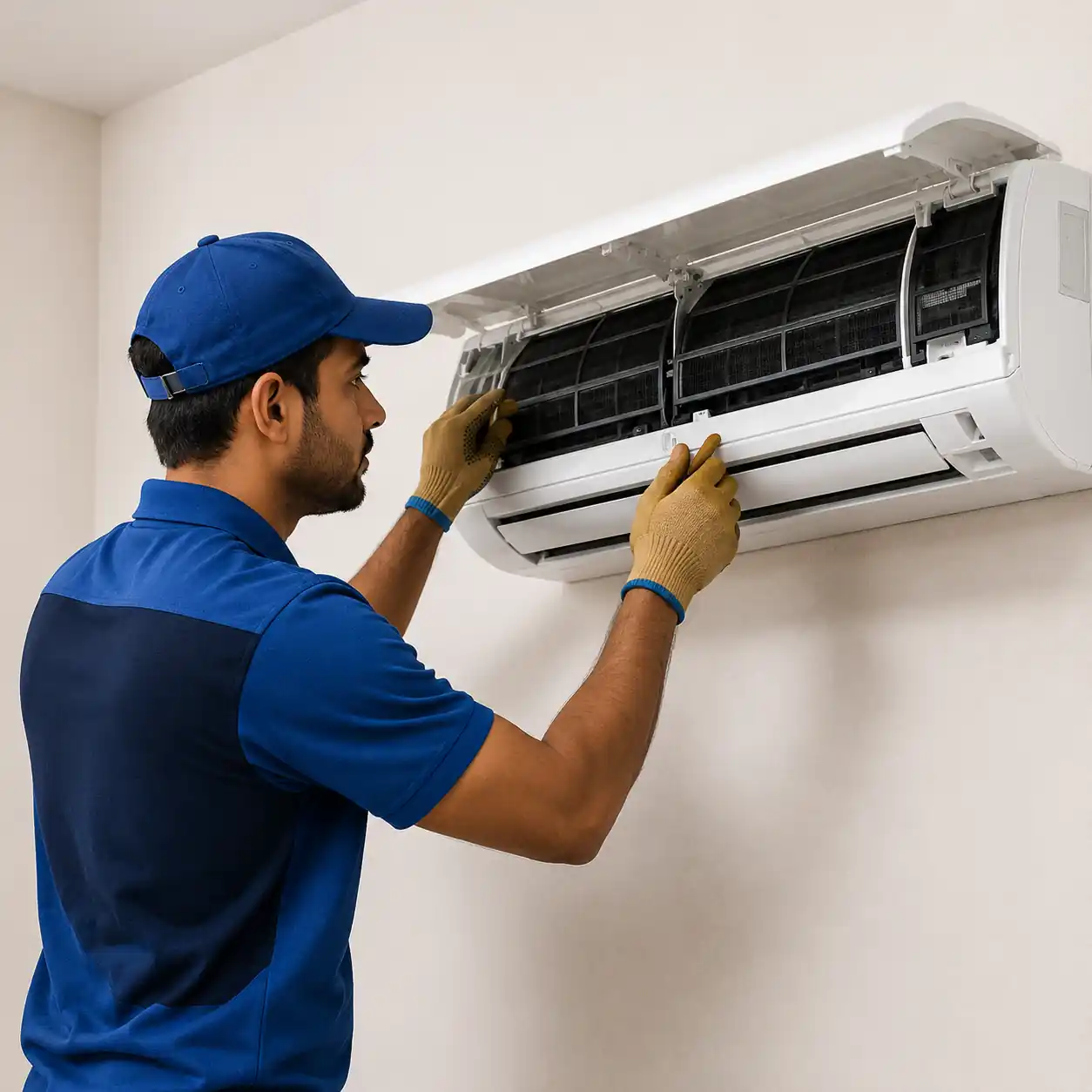
A proper leak visit starts with finding the cause, not just mopping the tray. The technician checks the filters and coil for icing, inspects the drain tray, and tests the drain line with a flush or blower to see where it is blocked. Depending on what is found, the fix is usually one of the following:
- Drain line and tray cleaning — flushing out slime and debris, then confirming free flow at the outdoor end.
- Coil cleaning — removing the dust layer that causes icing and drips, usually as part of an AC service or jet clean.
- Re-levelling the indoor unit — adjusting the mounting plate so water runs towards the outlet.
- Re-routing or replacing the drain pipe — removing uphill sections, sags and cracked joints.
- Re-insulating copper pipes — stopping condensation on bare sections.
- Pressure check and leak search — if icing points to low refrigerant.
Diagnosis and the cost are explained before any work begins, and any parts or refrigerant are quoted separately. Most drain-related leaks are fixed in the same visit.
Leakage in cassette, window and older ACs
Cassette ACs in offices and shops use a small drain pump to lift water into the ceiling drain. When that pump fails or its float switch sticks, water drips through ceiling tiles — so a cassette leak should be looked at quickly. Window ACs are designed to drain from the back, so a unit installed tilting towards the room will drip indoors. Older split units often have brittle drain hoses that crack at the joint behind the unit.
Preventing AC water leakage
Most leaks build up slowly and are avoidable. Wash the filters every two to three weeks during heavy summer use, and have the drain tray and line cleaned during each service — ideally once before summer and once before the monsoon, when humidity and condensate volume peak. Keep the outdoor end of the drain pipe free of plants, nests and puddles. If you are unsure how often your unit needs attention, read how often you should service your AC.
For homes and offices with several units, an AC AMC schedules drain and coil cleaning so leaks are caught before they damage walls, ceilings or furniture.
Frequently asked questions
Paras Refrigeration Service Team
AC service technicians, Bhubaneswar · Last reviewed 5 Oct 2026
Written by the Paras Refrigeration service team from day-to-day experience repairing, installing and maintaining residential and commercial AC systems across Bhubaneswar, Cuttack, Puri and Khordha.
- #AC repair
- #Water leakage
- #Split AC
- #Troubleshooting