In this articleShowHide
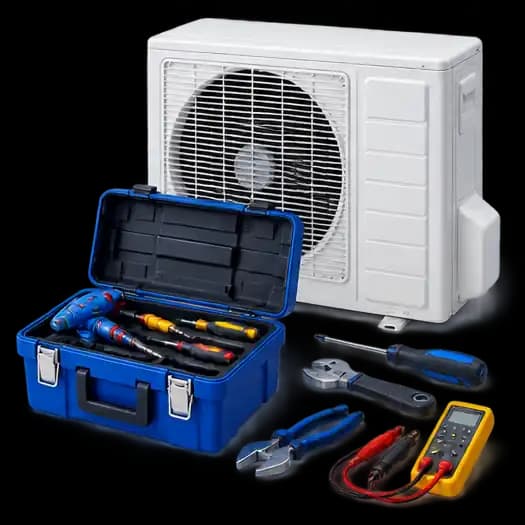
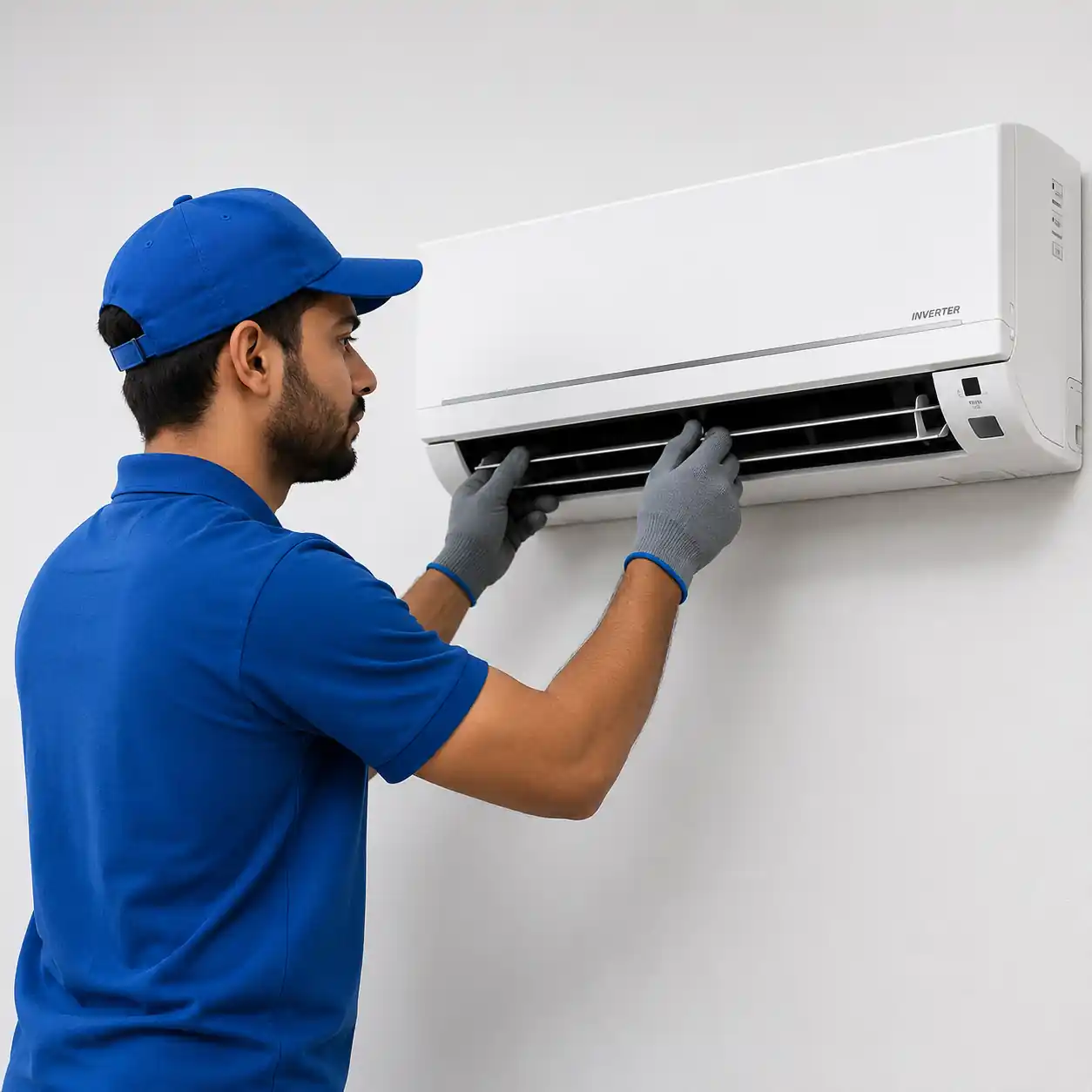
Inverter ACs save electricity and hold the room temperature steadier than older fixed-speed models, but they also bring more electronics into the picture. When something goes wrong, the fault is just as likely to be a sensor or a circuit board as a mechanical part. That is why inverter AC service and repair need a technician who understands how the indoor and outdoor boards talk to each other, not just how to clean a coil or add gas.
This guide covers the problems our technicians see most on inverter units in Bhubaneswar and across Odisha, what error codes really tell you, and how PCB repair is diagnosed and carried out.
How an inverter AC differs from a regular AC
A non-inverter AC runs its compressor at full speed until the room hits the set temperature, then switches off, then on again. An inverter AC uses an inverter board in the outdoor unit to vary the compressor speed — fast when the room is hot, slow once it is comfortable. To do that it relies on:
- An indoor PCB that reads room and coil temperature sensors and receives remote commands.
- An outdoor inverter PCB that converts AC power to DC and drives the compressor at variable speed.
- A communication line between the two boards that carries signals back and forth.
- Several thermistors (temperature sensors) on the coils, compressor discharge and outdoor air.
Any weak link in that chain can stop cooling, slow it down, or trigger a protection shutdown — even when the refrigerant and compressor are perfectly healthy.
Common inverter AC problems
Inverter AC not cooling, or cooling weakly
Start with the same basics as any AC: clean filters, Cool mode, 24°C, doors closed. If the outdoor unit runs but cooling is weak, the usual suspects are a dirty condenser, low refrigerant from a leak, or a sensor giving the board a false reading so it holds the compressor at low speed. Our broader guide on AC not cooling walks through the general causes.
Outdoor unit not starting
The indoor unit blows air but the outdoor fan and compressor stay silent. This often points to the communication between the two boards, a failed outdoor PCB, a blown fuse on the board, or a wiring problem at the terminal block — loose or corroded connections are common on units exposed to monsoon rain and coastal air.
AC starts, then stops after a few minutes
Repeated short cycles usually mean a protection circuit is tripping. Causes include very high or low supply voltage, overheating from a blocked condenser, a faulty compressor discharge sensor, or the board detecting abnormal current. The display often shows an error code or blinks a light when this happens.
Remote not responding or display dead
Check the remote batteries and the MCB first. If the indoor unit shows no life at all, the indoor PCB's fuse, power supply section or display board may have failed — frequently after a power surge.
What an inverter AC error code actually tells you
Most inverter ACs show a code on the display or blink an LED a set number of times when they detect a fault. An inverter AC error code is useful, but it is a pointer, not a verdict. Codes vary from brand to brand and even between models of the same brand, so check your user manual — the code points to the area of the fault, such as a sensor, communication, voltage or compressor protection.
A communication error, for example, can be caused by a faulty indoor board, a faulty outdoor board, or simply a loose wire between them. Replacing a board based on the code alone is how people end up paying for parts they did not need.
Before you call
Note the exact code or the number of blinks, take a photo of the display and the model sticker on the indoor unit, and send them when you book. It helps the technician bring the right tools and narrows the diagnosis.
Inverter AC PCB repair: how it is diagnosed
Good inverter AC PCB repair starts by proving the board is actually at fault. A typical diagnosis on a repair visit follows this order:
- Check supply voltage at the AC's point and at the outdoor terminal block.
- Inspect wiring and connectors between the indoor and outdoor units for looseness, burning or corrosion.
- Measure sensor (thermistor) resistance against expected values; a drifted sensor is a cheap fix that mimics a board fault.
- Inspect the PCB visually for burnt components, swollen capacitors, cracked solder joints, insect damage or moisture marks.
- Test the board's power supply section, fuse and relays with a multimeter.
- Check the compressor windings and insulation so a new or repaired board is not connected to a shorted compressor.
Only after these checks does the technician decide between component-level repair and board replacement. Component repair — replacing a fuse, relay, capacitor or damaged track — is often possible. Severe burn damage or a failed main chip usually means replacement with a compatible board.
| What the technician finds | Usual option | Why |
|---|---|---|
| Blown fuse, cause identified | Repair | Simple component swap once the root cause is fixed |
| Swollen capacitors or failed relay | Repair | Standard parts that can be replaced on the board |
| Corroded tracks from moisture or insects | Repair if limited, replace if widespread | Depends on how far the damage has spread |
| Heavy burn marks across the board | Replace | Too much collateral damage to repair reliably |
| Main chip or power module failure | Usually replace | Parts are often not serviceable separately |
Do not open the outdoor unit yourself
Inverter boards hold a high DC charge in their capacitors for some time after the power is switched off. Touching the board can cause a serious electric shock and can also damage sensitive components.
Why inverter boards fail in Odisha
Three local factors account for most of the PCB failures we see. Voltage fluctuation — sudden surges when power returns after a cut, or long spells of low voltage in peak summer — stresses the power supply section. Humidity and monsoon moisture get into the outdoor unit and cause corrosion on tracks and connectors. And on the coast, in Puri, salty air speeds up that corrosion.
Insects and lizards nesting in the warm outdoor unit are another surprisingly common cause of shorted boards, which is one reason regular cleaning matters.
How to protect your inverter AC
- Use a correctly rated MCB and wiring, and a voltage stabiliser if your area has unstable supply and your manufacturer recommends one.
- After a power cut, wait a few minutes before switching the AC back on so the supply settles.
- Keep the outdoor unit shaded from heavy rain where possible, but never enclosed.
- Book a full AC service before summer and after the monsoon, with the PCB covered during washing.
- For homes or offices with several units, an AC maintenance plan adds electrical checks to routine cleaning.
Booking inverter AC service or repair
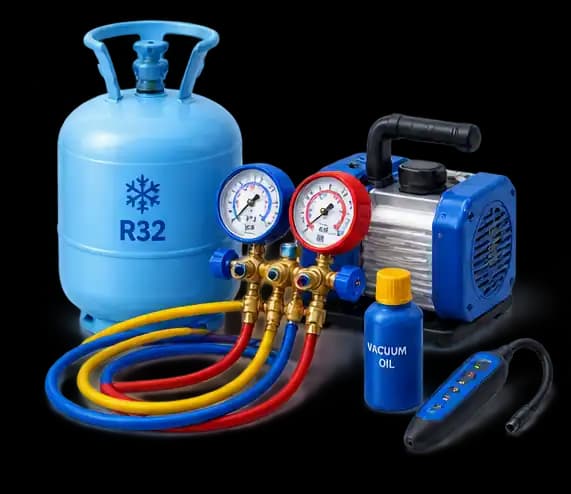
Paras Refrigeration provides inverter AC repair and servicing for all major brands as an independent service provider. On every AC repair visit, the technician diagnoses the fault and explains it, along with the cost, before work begins; parts such as PCBs, sensors and refrigerant are quoted separately. If cooling also seems low, read our guide on AC gas filling to understand what a proper leak check involves.
We cover Bhubaneswar, Cuttack, Puri and Khordha, aim to respond the same day, and the first visit within our 50km range is free.
Frequently asked questions
Paras Refrigeration Service Team
AC service technicians, Bhubaneswar · Last reviewed 5 Oct 2026
Written by the Paras Refrigeration service team from day-to-day experience repairing, installing and maintaining residential and commercial AC systems across Bhubaneswar, Cuttack, Puri and Khordha.
- #Inverter AC
- #PCB repair
- #Error codes
- #AC repair
- #Troubleshooting