In this articleShowHide
Cassette and ductable units are the workhorses of commercial cooling in Odisha — the four-way ceiling units in showrooms and restaurants, and the hidden ducted systems behind the slim grilles of offices and clinics. Both are out of sight, which is exactly why they get neglected. A proper cassette AC service looks quite different from a ductable AC service, and treating them the same way leaves dirt, water and airflow problems behind.
This guide explains how each system gets dirty, what a thorough service should cover, how often to book it, and how package and tower ACs in halls fit into the same plan. It is written from what our technicians see on commercial visits across Bhubaneswar and Cuttack, where heat, dust and long running hours are the norm.
Cassette vs ductable AC: the basic difference
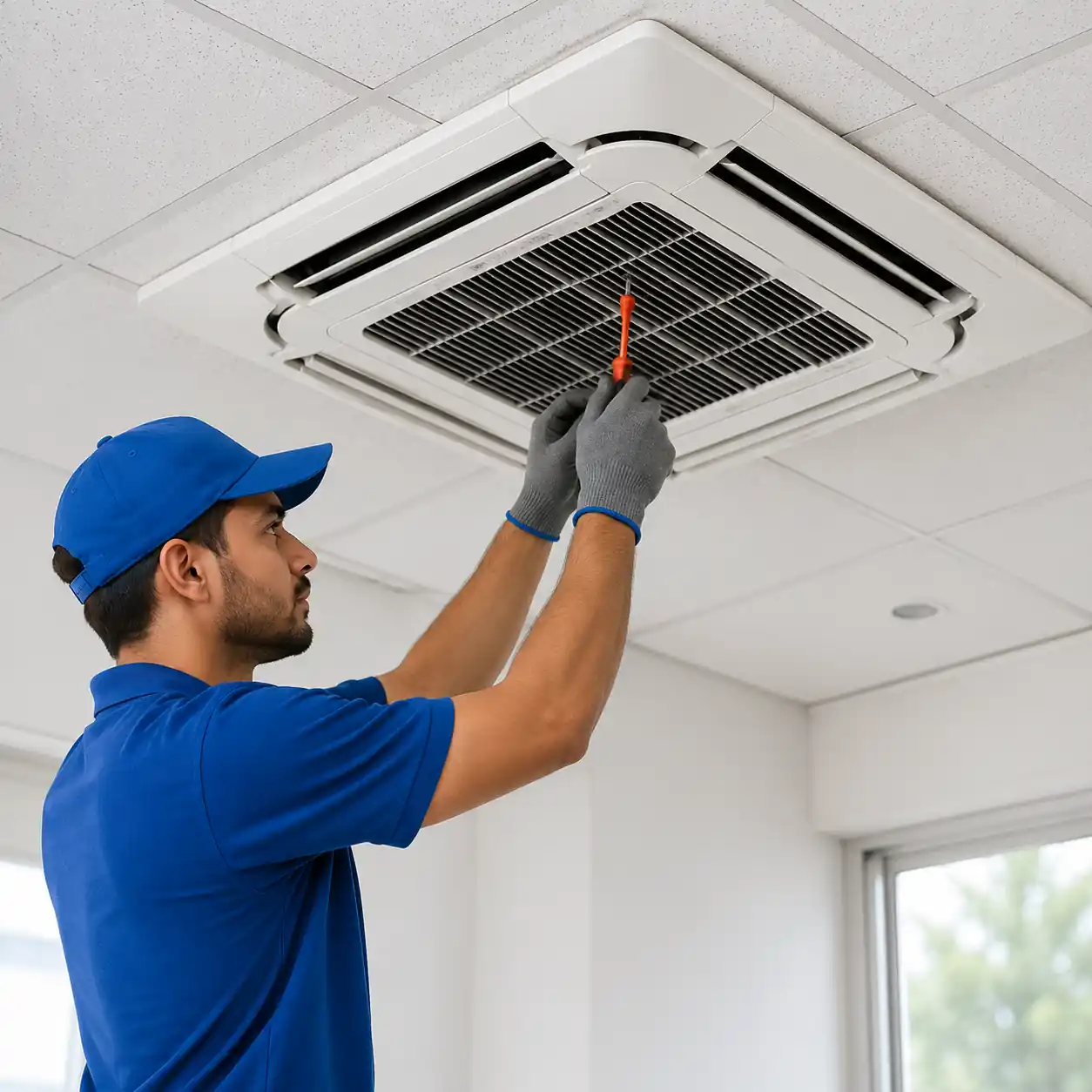
A cassette AC is a single indoor unit recessed into the false ceiling. It pulls room air in through the centre grille and throws cooled air out through four (sometimes two or one) louvres. Everything — filter, coil, blower, drain pan and drain pump — sits right above the grille.
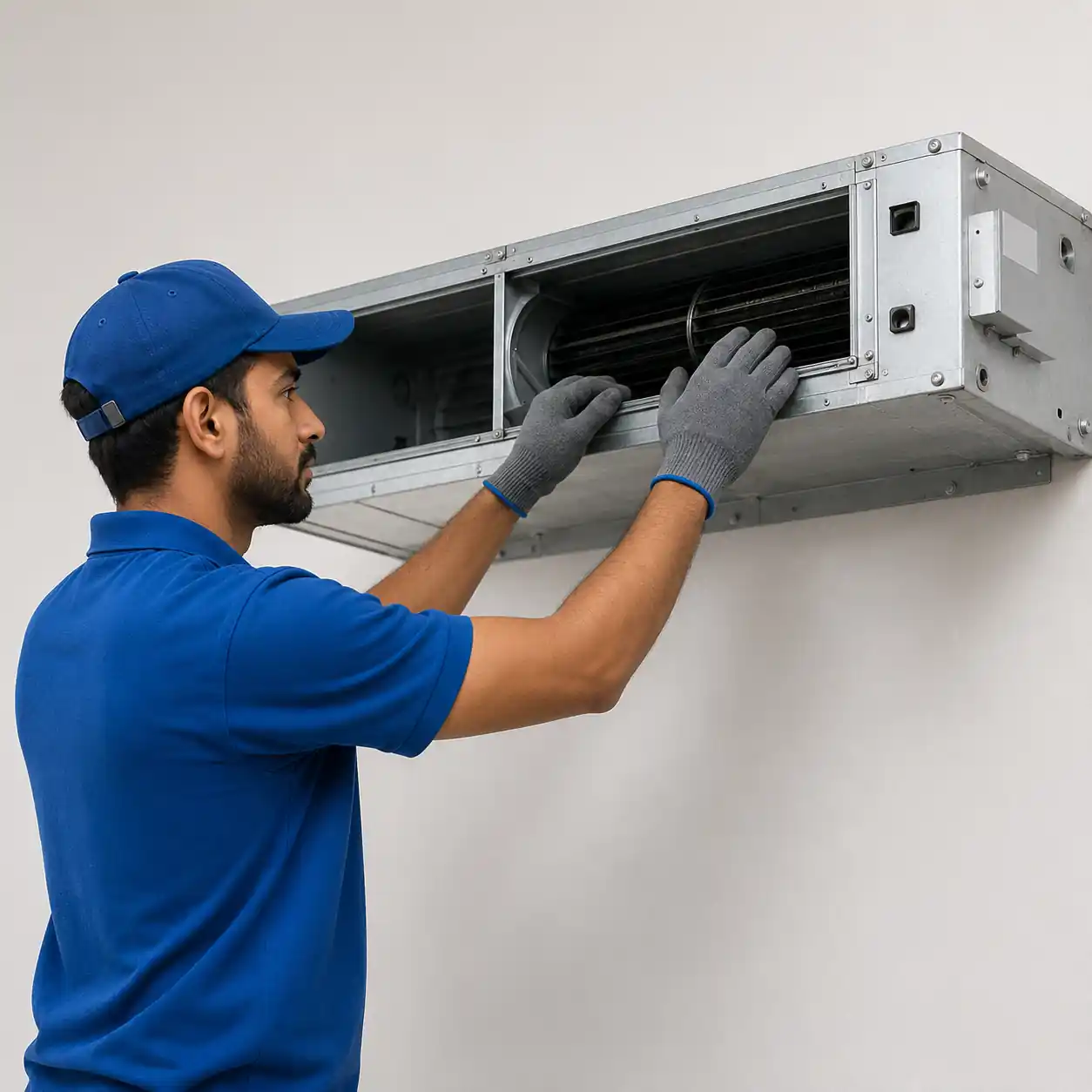
A ductable AC has its indoor unit hidden above the ceiling or in a utility space, connected to supply ducts that carry air to several diffusers and a return path that brings it back. The unit is the same idea as a large split AC, but the air travels through metres of ductwork before it reaches people.
| Point | Cassette AC | Ductable AC |
|---|---|---|
| Where the indoor unit sits | Flush in the false ceiling, reachable from below | Above the ceiling or in a service space |
| Access for service | Remove the front grille | Service panel or ceiling opening needed |
| Main dirt points | Filter, coil, blower, drain pan | Return filter, coil, blower, duct interior, grilles |
| Typical water problem | Drain pump or pan blockage | Drain line slope or clogged tray above ceiling |
| Airflow checks | Louvre movement, blower speed | Air volume at each diffuser, duct leaks, dampers |
| Typical service time | Shorter per unit | Longer, depends on access and duct length |
What a proper cassette AC service includes
A cassette unit is compact, so everything is packed tightly around the blower. Dirt and moisture build up fast, especially in restaurants where oily air reaches the coil. A complete cassette visit should cover:
- Grille and filter: removed, washed and dried. Kitchens and food courts often leave a sticky film that plain water alone will not lift.
- Evaporator coil: cleaned with a suitable coil cleaner and rinsed, with the electrical box covered so no water reaches it.
- Blower wheel: checked for dust and slime build-up, which reduces airflow and causes water spitting from the louvres.
- Drain pan and drain pump: pan cleaned of sludge, pump tested by pouring water in and watching it lift and drain. The float switch should cut the unit if water rises.
- Louvre motor: checked so all four sides swing and no side is stuck closed, which creates hot spots in the room.
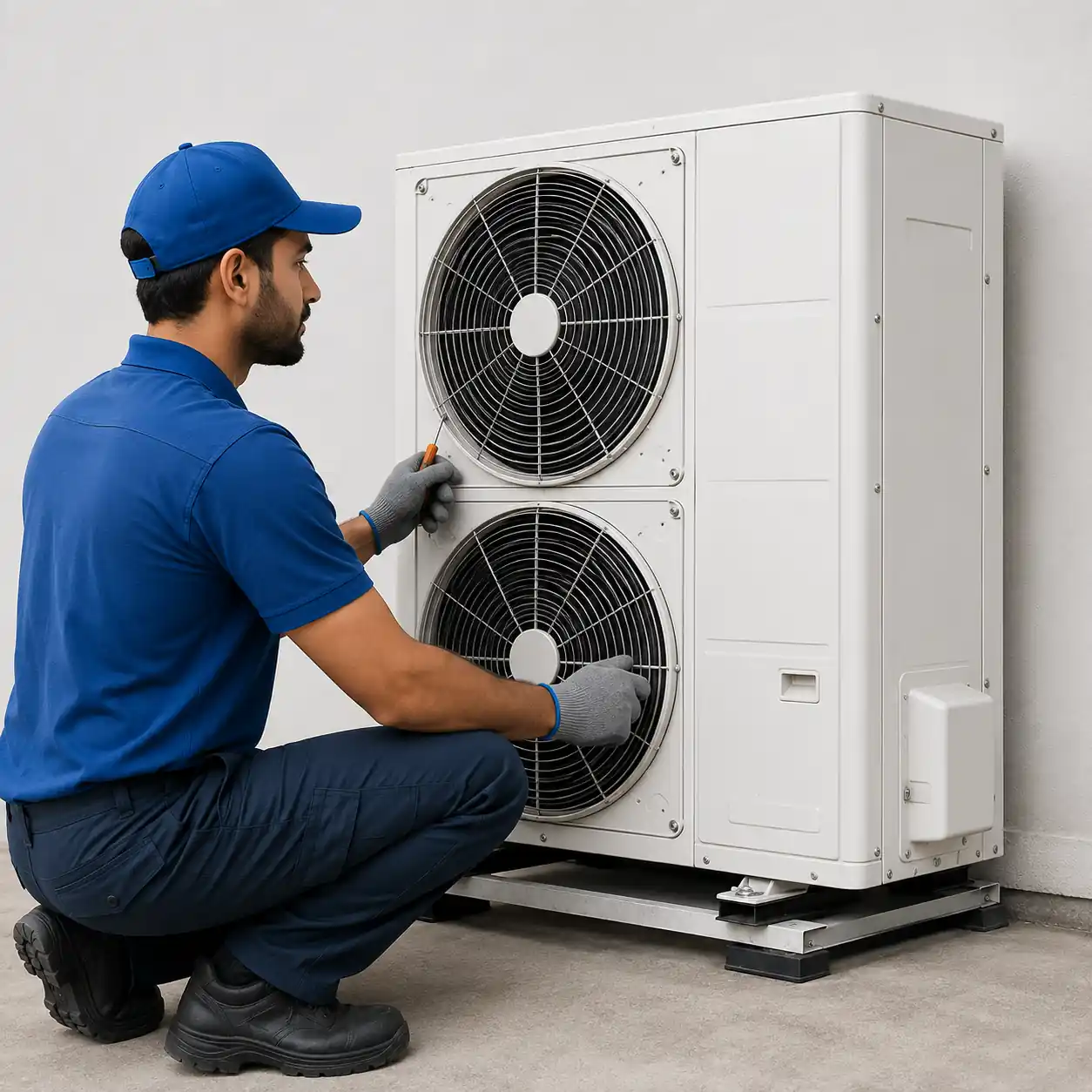
- Outdoor unit: condenser coil washed, fan and electrical connections checked, operating pressure and current noted.
Keep an eye on the ceiling tiles
Brown rings or sagging on the tiles around a cassette are early signs of a drain problem. Report them at the first sign — a slow leak above a false ceiling can soak tiles and wiring long before it drips onto the floor.
What a ductable AC service involves
With a ductable AC, the unit itself is only half the job. The air has to travel cleanly through the ducts and reach each room at the right volume. A thorough ductable AC service usually includes:
- Opening the service panel and cleaning or replacing the return air filter — on many sites this filter is undersized or missing altogether, and the coil takes all the dust.
- Cleaning the evaporator coil and blower, and checking belt tension or motor bearings on larger units.
- Flushing the drain tray and drain line, and confirming the line has enough slope to the outlet.
- Measuring airflow at the supply diffusers to find rooms that are starved of air, which usually points to a crushed duct, a closed damper or a disconnected joint.
- Checking duct insulation for tears; bare ducts sweat in humid weather and drip through the ceiling.
- Cleaning the supply and return grilles, and servicing the outdoor unit with pressure and electrical checks.
Duct interiors do not need deep cleaning on every visit, but they should be inspected. In new fit-outs, construction dust left inside the ducts is a common reason for dusty air and fast filter clogging in the first few months.
How often should you schedule ceiling AC maintenance?
There is no single answer, because running hours and surroundings matter more than the AC type. As a starting point for commercial sites in Odisha:
- Showrooms, offices, clinics (10–12 hours a day): filter wash every two to four weeks in summer, full service every three to four months.
- Restaurants and food courts: filters more often, and coil cleaning with a degreasing cleaner at every service.
- Ductable systems in commercial buildings: performance and duct inspection every three to six months, sooner in dusty locations.
- Coastal sites in Puri: outdoor coils and fins need closer attention, as salty air speeds up corrosion.
Booking this visit by visit is easy to forget once the season gets busy. Many businesses move their ceiling units onto an AC AMC, where visits are scheduled in advance. Our office AC maintenance checklist covers what facility managers should track between visits.
Package AC and tower AC service for halls
Banquet halls, auditoriums and large commercial floors often run package ACs or tower ACs instead of ceiling units. They face a different problem: long idle periods followed by full load on event days.
Package AC
A package unit holds the compressor, both coils and the blower in one cabinet, usually ducted into the hall. Service covers the same coil, blower, drain and duct checks as a ductable system, plus closer attention to belts, motor bearings and electrical contactors, which wear under heavy load. Voltage fluctuation is hard on large compressors, so the technician should check supply voltage and protection devices too.
Tower AC
Tower units are simpler to reach, since they stand on the floor, but their filters clog quickly in crowded halls. Schedule a service before each wedding or event season rather than after the first complaint. A unit that has stood idle for months should be cleaned and test-run a few days before the first booking, not on the morning of it.
Do not run a commercial unit with a known fault
Tripping, unusual noise, ice on pipes or water dripping from the ceiling should be checked before the next busy day. Running large units through a fault can turn a small electrical repair into compressor damage.
Signs your ceiling or ducted AC needs attention now
- One side of a cassette blows weakly or the louvre does not move.
- Some rooms on a ductable system are cold while others stay warm.
- Water marks on ceiling tiles or dripping near grilles.
- A musty smell when the AC starts, usually from a dirty drain pan or blower.
- Higher power bills with the same usage, or the unit running non-stop without reaching the set temperature.
Some of these clear up with a regular AC service; others, like a failed drain pump or electrical fault, need AC repair. Our technicians diagnose first and explain the cost before any work begins, with parts and refrigerant quoted separately.
Frequently asked questions
Paras Refrigeration Service Team
AC service technicians, Bhubaneswar · Last reviewed 5 Oct 2026
Written by the Paras Refrigeration service team from day-to-day experience repairing, installing and maintaining residential and commercial AC systems across Bhubaneswar, Cuttack, Puri and Khordha.
- #Cassette AC
- #Ductable AC
- #Commercial AC
- #AC maintenance